

Bracket
The bracket page shows the knockout stage of a tournament as a single connected diagram — who is qualified, who has been drawn against whom, what the result of each tie was, and which paths through the bracket are still alive. It is the clearest way to answer the question supporters actually ask during a knockout tournament: if my team wins this tie, who do they play next? The bracket answers that without arithmetic, and it updates automatically as results land.
Tournament data on this page is supplied through the API-Sports widget layer (widgets.api-sports.io), the same feed that drives the fixtures page, the live scores page and the head-to-head comparison. Because everything comes from one feed, a tie marked as played on the bracket always matches the corresponding fixture and final score on the fixtures page.
Knockout Bracket
The bracket diagram renders in place of the comment above. Each column represents a round, progressing from the round of 32 at the left to the final at the right, with the champion slot at the far edge.
How to Read a Bracket
Reading a bracket takes about thirty seconds once you know the conventions.
- Columns are rounds. The leftmost column is the earliest round; each column to the right is a later round. The winner of a tie advances one column to the right.
- Lines connect a tie to its parent tie. Follow the line from a result to see which round that winner enters, and against whom. Two teams are drawn together in a later round only if their paths through the bracket converge there.
- Filled results versus placeholders. A tie that has been played shows a final score. A tie not yet played shows the two entrants and a kick-off time, or a placeholder such as “Winner of Match 71” when the entrants depend on a tie that has not yet been decided.
- Markers. Extra time and penalty shoot-outs are marked explicitly. A knockout tie can never be drawn, so any score level after ninety minutes is resolved by extra time and then by shoot-out, and the bracket always records which method decided it.
- Eliminated sides. Once a tie is decided, the losing side is dimmed or marked as eliminated, so the surviving field is readable at a glance.
The 2026 World Cup Knockout Structure
The 2026 FIFA World Cup is the first forty-eight-team edition of the men’s tournament, hosted across the United States, Canada and Mexico across sixteen cities, with one hundred and four matches from the opening fixture to the final at MetLife Stadium on 19 July 2026. Its knockout structure is the biggest change in the tournament’s history and it is worth understanding before you look at the bracket.
Twelve groups of four are drawn, which is four more groups than the previous format. The top two teams in each group advance automatically, and the eight best third-placed teams — ranked by points, goal difference and goals scored — also advance, taking the field to thirty-two. The round of 32 is therefore new and is contested by teams of very different pedigree: a first-ever qualifier from one confederation can be drawn against a semi-finalist from another, and it can genuinely go either way.
From the round of 32 the format returns to the familiar shape. The round of 16, quarter-finals and semi-finals are uncontested single legs, followed by the final at MetLife Stadium. Because North America hosted the tournament, there is no separate third-place playoff in the traditional European sense; the placement structure is confirmed by the organisers and reflected on this bracket as results land.
Why the New Format Changes the Maths
The practical consequence of a thirty-two-team knockout stage is that a poor group-stage finish is less forgiving. In a sixteen-team bracket, finishing third in a group is elimination. In 2026, finishing third can still be enough — if it is one of the eight best third-placed teams. That single change should produce several first-time knockout appearances from nations that would previously have gone home after the group stage, which is why the run-up to the tournament has carried so much tension in the qualifying phase.
It also changes the shape of the draw. Because the eight best third-placed teams are allocated to specific round-of-32 slots by a published procedure, a third-place qualifier’s position in the bracket can be determined by the coefficients of the groups they finish behind, not simply by where they sit geographically. The bracket is where this becomes visible.
Following the Bracket Live
During a tournament, the bracket and the live scores page are used together. The live page gives you the running state of matches as they happen — minute by minute, with goals and cards as they occur. The bracket gives you the structural consequence of each result: which quarter of the draw is now settled, which finalists remain possible, and how many ties are left before the champion is determined.
For background on any side in the bracket, the players directory gives squad and season context, and the head-to-head comparison tells you what happened the last time two of these teams met. For upcoming ties not yet drawn, the fixtures page lists every scheduled match with kick-off times and venues.
Data Notes and Limitations
Draw positions, tie results and extra time or shoot-out outcomes are supplied by the API-Sports feed. Later-round kick-off times and venue allocations are confirmed by the organisers and can change at short notice; where a time is provisional, the bracket reflects whatever the official feed states at the time of viewing. We do not manually edit bracket data, so if you believe a result is wrong, report it through the Contact page and we will check it against the fixture record. The page contains no external links or promotional material. The bracket is informational. For how we handle your data when you visit this page, see the Privacy Policy; for the rules governing what you may do with the content, see the Terms of Use.
 Mexico
 South Africa
 South Korea
 Czechia
 Switzerland
 Canada
 Bosnia & Herzegovina
 Qatar
 Brazil
 Morocco
 Scotland
 Haiti
 USA
 Australia
 Paraguay
 Türkiye
 Germany
 Ivory Coast
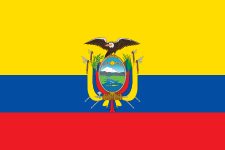 Ecuador
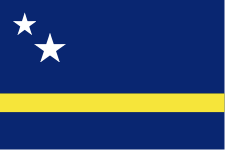 Curaçao
 Netherlands
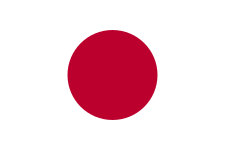 Japan
 Sweden
 Tunisia
 Belgium
 Egypt
 Iran
 New Zealand
 Spain
 Cape Verde Islands
 Uruguay
 Saudi Arabia
 France
 Norway
 Senegal
 Iraq
 Argentina
 Austria
 Algeria
 Jordan
 Colombia
 Portugal
 Congo DR
 Uzbekistan
 England
 Croatia
 Ghana
 Panama