
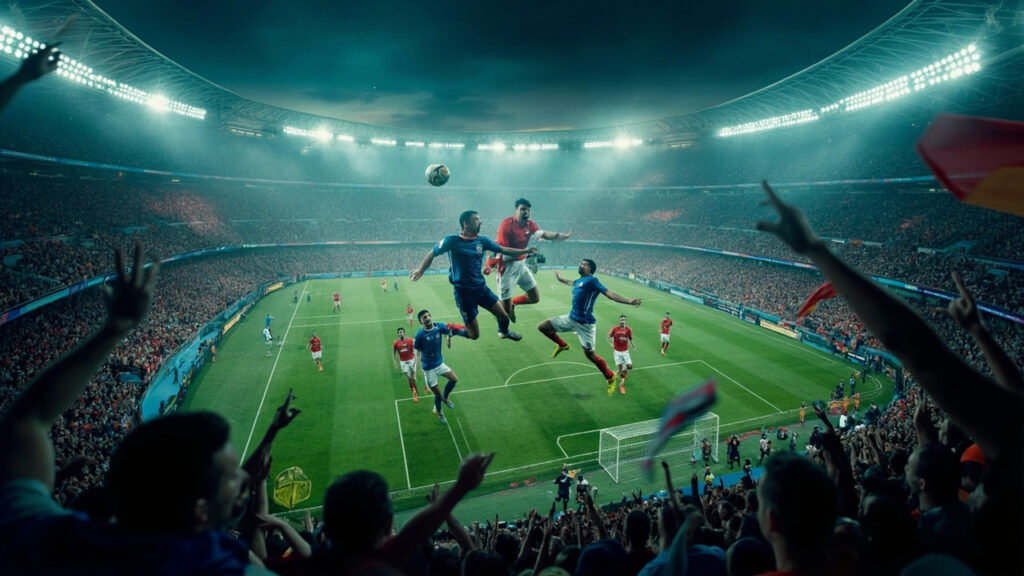
France’s quest to reclaim their status as world champions begins in earnest at the 2026 World Cup, and standing in their path is an Iraq side determined to prove they belong among football’s elite on the sport’s greatest stage.
The encounter represents more than just three points in Group G. For France, it represents the first step toward erasing the disappointment of their 2022 final defeat to Argentina in Doha. For Iraq, it represents an opportunity to announce their arrival as genuine competitors capable of troubling continental powers.
Les Bleus arrive at this tournament having won 14 of their last 18 World Cup group stage matches, a remarkable record that underscores their consistency at the tournament’s premier level. Their 2018 triumph in Russia and runner-up finish four years later illustrate a nation that consistently performs when it matters most on the international stage.
Didier Deschamps’ squad selection has drawn considerable attention in the lead-up to this fixture. The French manager has opted for a blend of proven performers and emerging talent, with Kylian Mbappé anchoring an attacking unit that scored 16 goals across qualifying. The Paris Saint-Germain forward’s pace and direct running style will test Iraq’s defensive organization from the first whistle.
The French midfield, featuring a mix of Premier League experience and Ligue 1 creativity, will be tasked with breaking down what promises to be a compact Iraqi defensive block. Historical patterns suggest France excels against sides that sit deep, with their combination play and set-piece prowess proving decisive in similar tactical scenarios.
Iraq’s journey to this World Cup has been marked by resilience and tactical evolution. Under Portuguese coach Jesus, the Lions of Mesopotamia have transformed from a team reliant on individual moments into a cohesive unit capable of executing game plans at the highest level. Their qualifying campaign saw them concede just eight goals across 10 matches, a defensive record that reflects their organizational discipline.
The Iraqi squad features several players who have developed their craft in European leagues, providing valuable experience against top-tier opposition. Their counter-attacking philosophy, built on quick transitions and aggressive pressing, has upset more favored opponents in recent years. The West Asian nation qualified for the World Cup only twice before this tournament, making their appearance in 2026 a landmark achievement for Iraqi football.
The tactical matchup presents fascinating subplots. France’s full-back deployment, often pushing high to create width, could expose space behind their defensive line—territory Iraq’s quick forwards will look to exploit. Conversely, France’s ability to monopolize possession and create overloads in the final third may force Iraq deeper, testing their defensive concentration across 90 minutes.
Historical context enriches this fixture. France’s colonial connections to the Middle East have influenced football exchanges for decades, with numerous Iraqi players featuring in French leagues throughout their careers. This cultural bridge adds an intriguing dimension to proceedings, though on the pitch, national allegiances supersede any shared history.
The venue for this encounter promises to contribute to the atmosphere. Given the significant Iraqi diaspora in North America, expect vociferous support for the Lions of Mesopotamia, creating a neutral ground that may not feel entirely unfamiliar to either side.
Looking ahead, this match carries significant implications for group standings. A France victory would establish them as favorites for top spot, while a surprise Iraq result could completely reshape qualification calculations. Draws in early World Cup fixtures often prove decisive in final standings, making this contest crucial for both nations’ advancement hopes.
The starting elevens will likely see France deploy their strongest available XI, with Mbappé partnered by Arsenal’s Olivier Giroud in a strike partnership that offers different dimensional threats. N’Golo Kante’s inclusion in midfield provides defensive stability, allowing more creative players freedom to operate in attacking positions.
Iraq’s lineup will likely feature a 4-4-2 or 4-1-4-1 formation designed to frustrate French creativity while maintaining numerical equality in midfield battles. Their success hinges on limiting space between defensive lines and converting limited attacking opportunities with clinical efficiency.
Prediction models favor France significantly, but football’s capacity for upsets remains constant. The French squad’s quality suggests they possess the tools to break down determined defenses, yet Iraq’s organizational capacity and desire to make history cannot be dismissed.
The outcome likely hinges on France’s patience in build-up play and their ability to convert chances against a side expected to defend deep. Should Iraq score first, their defensive structure would become even more formidable, potentially forcing France to alter their approach in search of an equalizer.
For now, anticipation builds for what promises to be a compelling contest between established pedigree and emerging ambition, with World Cup qualification dreams hanging in the balance.