
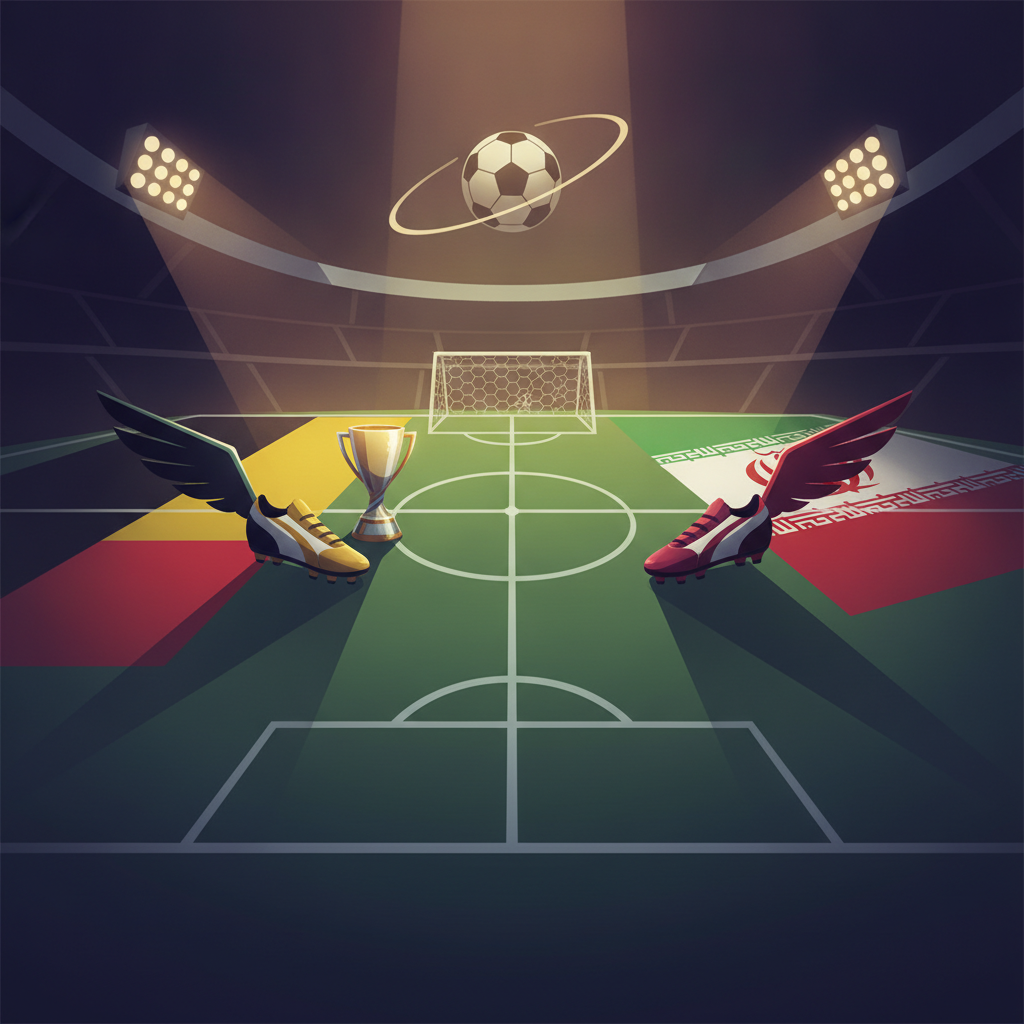
Belgium and Iran prepare to clash in what promises to be a fascinating World Cup Group G encounter on Sunday, June 21, with both sides carrying distinct ambitions into the fixture at a pivotal moment in the tournament.
The Red Devils arrive at this matchup as heavy favorites according to the latest betting markets, reflecting Belgium’s sustained presence among Europe’s footballing elite. Roberto Martínez’s squad has evolved significantly since their impressive run to the semi-finals at the 2018 World Cup in Russia, where they finished third after a memorable campaign that saw them accumulate 14 points across seven matches. That tournament marked Belgium’s best-ever World Cup performance, and the current generation appears determined to build upon that foundation.
Iran, meanwhile, represents one of Asian football’s most resilient forces. The Team Melli have qualified for four consecutive World Cups, demonstrating remarkable consistency at the continental level despite operating in one of football’s most competitive qualification regions. Their defensive organization has become their trademark, with Carlos Queiroz implementing a disciplined structure that frustrated more favored opponents during previous tournaments.
Tactical considerations will dominate pre-match discussions in both camps. Belgium’s attacking arsenal features an exceptional blend of creativity and pace, with Kevin De Bruyne orchestrating play from midfield while forwards like Romelu Lukaku offer physical presence in the final third. De Bruyne’s vision and passing accuracy have established him as one of the world’s premier midfielders, registering 23 assists during his club’s Premier League campaign—a statistic that underscores his influence on European football’s biggest stages.
Iran’s approach will likely emphasize compact defensive shape and rapid transitions. The squad possesses several players with European club experience, most notably goalkeeper Alireza Beiranvand, whose performances during qualification catches earned widespread recognition. The Iranian defense conceded only five goals across 18 qualification matches, a record that highlights their organizational discipline and ability to frustrate attacking opponents.
Historical context enriches this fixture considerably. Belgium and Iran have met only once previously at senior international level, a 2005 friendly that ended in a 1-1 draw in Brussels. That encounter offered glimpses of Iran’s capability to compete against top-tier European nations, though Sunday’s match carries far greater significance within the World Cup framework.
The stakes extend beyond this single encounter. Both teams understand that Group G’s competitive balance—including Egypt and New Zealand—demands maximum points from favorable fixtures. Belgium’s path to the knockout stages likely requires them to establish superiority against teams ranked below them, making this match essential for their tournament ambitions. For Iran, securing a positive result against a European powerhouse would dramatically enhance their prospects of advancing beyond the group stage for the first time in their history.
Individual matchups will determine the outcome’s trajectory. Belgium’s defensive midfield partnership must neutralize Iran’s counter-attacking threats while maintaining the platform for attacking movements. Iran’s backline, marshaled by experienced center-backs, faces the challenge of containing Belgium’s diverse attacking options without sacrificing the numerical solidity that defines their defensive philosophy.
The psychological dimension adds another layer of intrigue. Belgium’s golden generation has faced criticism for underdelivering relative to expectations, particularly following disappointments at major tournaments. Players like De Bruyne and Lukaku carry significant responsibility to demonstrate leadership during decisive moments. Iran’s players, conversely, embrace the underdog role, drawing motivation from proving doubters wrong against football’s established powers.
Weather and venue conditions may influence tactical approaches as the match approaches. Stadium preparations and climate considerations typically factor into team selection decisions, with both coaching staffs likely prepared to adjust strategies based on environmental factors.
Looking ahead, the winner of this fixture gains substantial momentum entering the group stage’s critical phase. Belgium would reinforce their status as genuine contenders while building confidence for tougher challenges ahead. An Iranian victory would constitute one of the tournament’s most significant upsets and reshape expectations surrounding Asian football’s competitive capabilities on the global stage.
Supporters and analysts anticipate a match characterized by contrasting styles and tactical cleverness. Belgium’s possession-based approach will test Iran’s defensive resolve, while Iran’s set-piece opportunities and counter-attacking potential could expose vulnerabilities in Belgium’s defensive structure. The outcome may ultimately depend on which team executes their game plan more effectively during the 90 minutes.
As both nations finalize preparations, the footballing world awaits what promises to be an absorbing encounter between two proud footballing traditions. Whether Belgium’s quality prevails or Iran’s resilience prevails remains to be seen, but this fixture guarantees compelling theatre for audiences worldwide.